
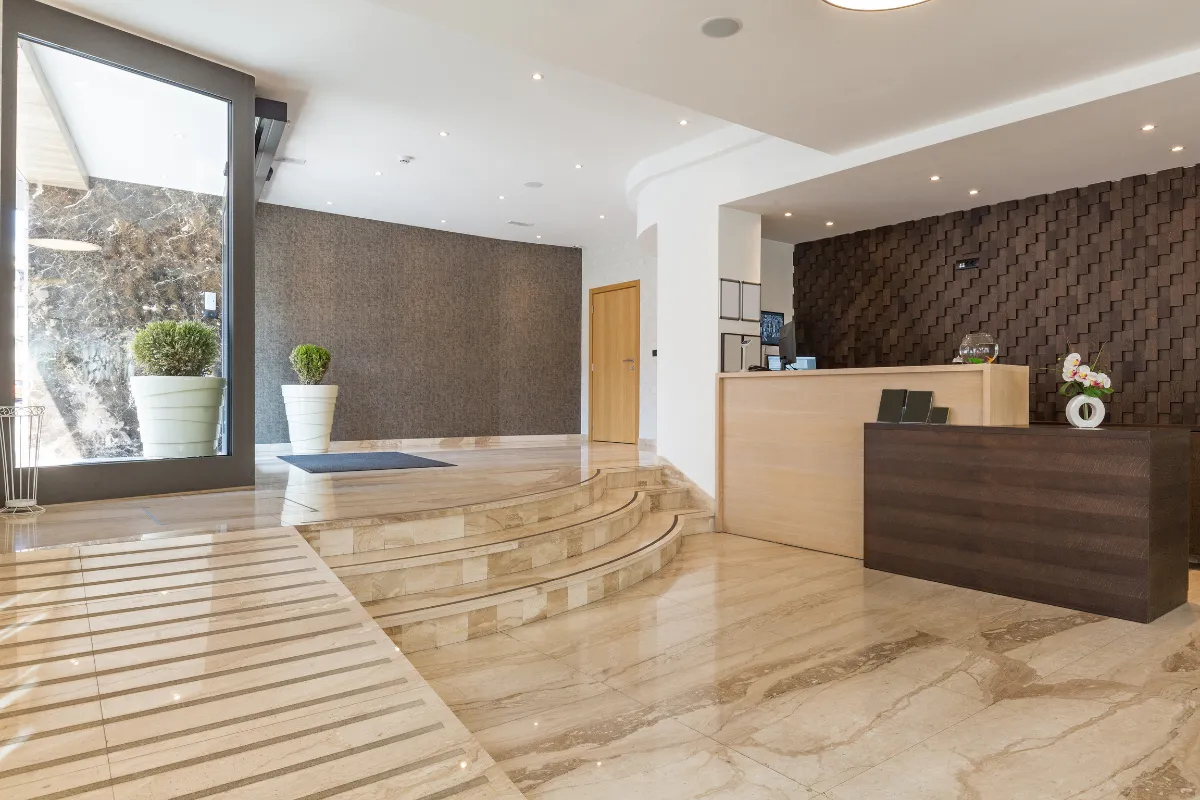


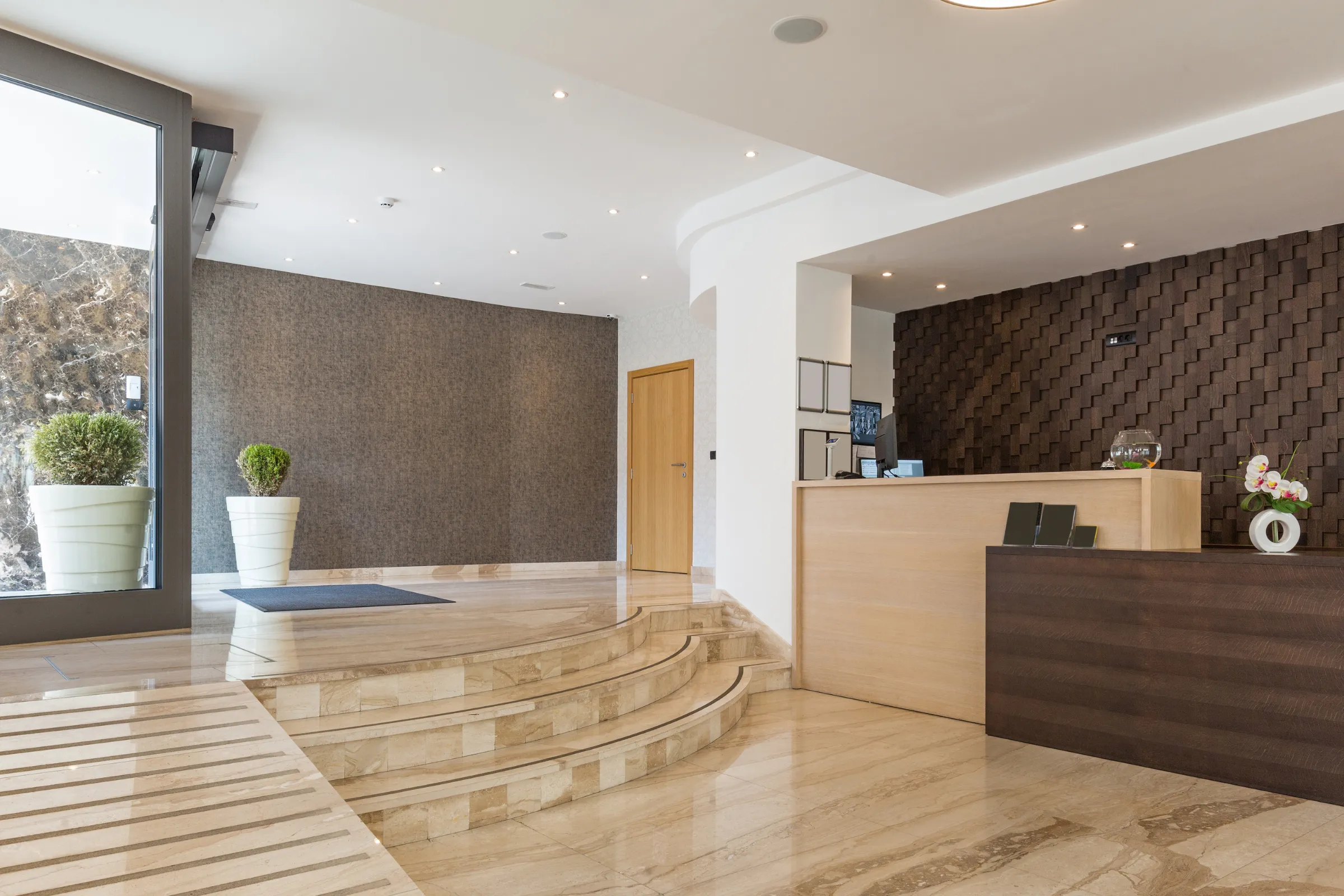
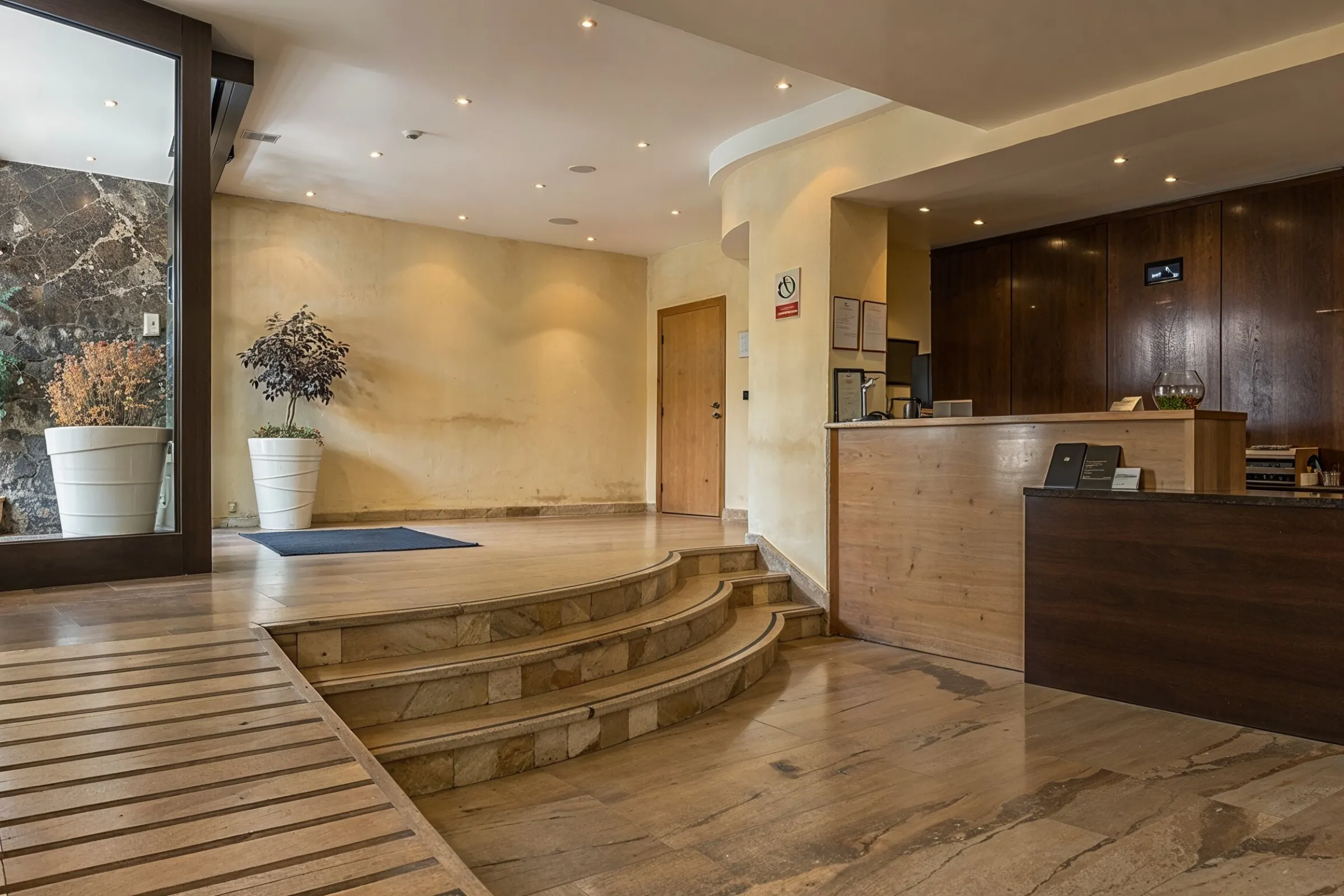
 Before
After
Before
After
Los Angeles Commercial Remodeling Project Overview
This commercial remodeling project in Los Angeles focused on updating an outdated business interior that no longer matched the company’s image, customer experience, or day-to-day operational needs. The original lobby and reception area felt dated, darker, and less polished than the business wanted for clients, visitors, employees, and property value.
The goal was to create a more professional Los Angeles commercial remodel with better lighting, cleaner finishes, improved reception flow, updated flooring, stronger brand presentation, and a more welcoming first impression. By planning the commercial interior renovation around both appearance and function, the finished space became more useful, more credible, and better aligned with modern business expectations.
What the Business Wanted to Improve
The client wanted a commercial renovation project in Los Angeles that would improve how customers and staff experienced the space from the moment they walked in. The existing lobby had worn finishes, dated walls, inefficient reception flow, and lighting that did not support a clean, confident business environment.
- Modernize an outdated commercial space with a cleaner, more professional lobby design
- Improve customer experience, reception flow, employee comfort, and first impressions
- Update flooring, lighting, walls, finishes, and customer-facing areas for stronger brand presentation
- Plan around business operations, access, cost factors, inspections, and permit-aware commercial remodeling needs
Our Commercial Remodeling Approach
A successful commercial remodeling project in Los Angeles should improve both the look and the performance of the space. For this project, our team focused on customer-facing presentation, practical workflow, durable finish selections, lighting quality, commercial flooring, lobby comfort, reception usability, and a remodeling plan that respected business operations and property requirements.
1. Business-Focused Layout & Flow:
The commercial remodel was planned around how customers, employees, vendors, and visitors move through the space. Reception access, lobby circulation, waiting areas, and workflow were considered so the finished interior could feel more organized, more efficient, and easier to use.
2. Reception, Lobby & Customer Experience:
The lobby renovation improved the customer-facing area with a more polished reception presence, cleaner visual lines, brighter surfaces, and a stronger first impression. This helped the commercial space feel more professional, welcoming, and aligned with the business brand.
3. Lighting, Flooring & Commercial Finishes:
Updated lighting, refreshed wall finishes, durable commercial flooring, and coordinated materials helped the space feel cleaner and easier to maintain. Finish selections were reviewed with long-term use, appearance, traffic, and business credibility in mind.
4. Value-Focused Commercial Renovation:
The project was planned to support customer confidence, tenant appeal, employee comfort, property presentation, and long-term usability. A well-planned commercial interior remodel can help business owners and property owners create a space that feels more current without overcomplicating the renovation.
The Result: A More Professional and Functional Commercial Space
The completed Los Angeles commercial remodeling project created a brighter, cleaner, and more professional business environment. The updated lobby, improved reception area, refreshed finishes, better lighting, and smoother traffic flow helped the space feel more welcoming for customers and more functional for daily operations.
“The remodel changed the way clients see our business when they walk in. The lobby looks cleaner, more professional, and much better organized for our team and visitors.”
- Adrian K., Los Angeles, CA
Planning a Similar Commercial Remodel?
If your commercial space feels outdated, inefficient, poorly lit, difficult to navigate, or no longer aligned with your brand, a commercial remodeling consultation can help you understand the next step. Our team can review your lobby, office, retail space, tenant improvement needs, workflow, finish goals, accessibility considerations, cost factors, business disruption concerns, and permit-aware remodeling requirements for your Los Angeles property.
Frequently Asked Questions
A commercial remodeling project in Los Angeles can include lobby updates, reception area improvements, office remodeling, retail remodeling, tenant improvement work, flooring, lighting, walls, ceilings, paint, storage, layout changes, accessibility review, plumbing or electrical coordination, and finish upgrades. The exact scope depends on the property type, business use, existing conditions, and city requirements.
Commercial remodeling cost in Los Angeles depends on square footage, layout changes, finish level, flooring, lighting, electrical work, plumbing, accessibility needs, building conditions, business operations, permits, inspections, and project complexity. A professional walkthrough can help clarify the cost factors that apply to your specific commercial renovation.
Permit and code requirements may vary based on the work being performed. Commercial remodels may require review when the project involves layout changes, electrical work, plumbing, accessibility updates, occupancy-related changes, structural work, mechanical systems, or certain tenant improvements. A professional review can help clarify what may be required for your Los Angeles commercial space.
Whether a business can stay open during a commercial remodel depends on the scope of work, safety needs, customer access, inspections, noise, dust control, utilities, scheduling, and site conditions. Some projects may be phased to reduce disruption, while others may require temporary closures in certain areas for safety and coordination.
Value-focused commercial upgrades often include better lighting, durable flooring, improved reception areas, cleaner customer-facing spaces, efficient office layouts, updated walls and finishes, improved storage, accessibility-aware planning, and layout changes that support workflow. The best upgrades depend on the business type, property condition, tenant needs, budget, and long-term use of the space.